

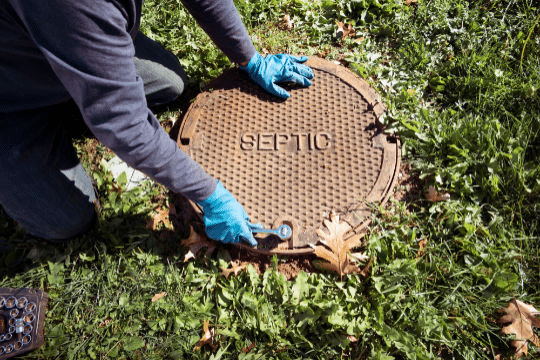
A septic emergency has a way of announcing itself at the worst possible time. Maybe it’s a Sunday dinner interrupted by a gurgling drain, or a Monday morning greeted by soggy grass and a smell you can’t ignore. Whatever the trigger, once you realize you’re dealing with an emergency septic repair, the minutes before help arrives matter. What you do and don’t do in that window can mean the difference between a straightforward fix and a much bigger, messier problem.
If you’re a homeowner in Lancaster, Coatesville, or anywhere across Pennsylvania’s Chester, Berks, or Delaware Counties, here’s exactly what to do before the crew arrives, plus how to recognize the warning signs earlier next time.
Contents
- Signs You’re Dealing With a Septic Emergency
- What to Do Before the Crew Arrives
- 1. Stop Using Water Immediately
- 2. Locate Your Septic Tank and Shut-Off Points
- 3. Protect Your Home From Backup Damage
- 4. Avoid the DIY Fixes That Make Things Worse
- 5. Keep People and Pets Away From the Drain Field
- 6. Gather Basic System Information
- 7. Call a Team That Handles True Emergencies
- Why Fast Response Matters
- Preventing the Next Emergency
- Trust Tri-County Water Services When It Matters Most
- Your septic and sewer systems deserve expert care. Trust Tri-County Water Services for fast, reliable, and transparent services that ensure your system stays trouble-free across PA and MD.
- Frequently Asked Questions
- / Author
- Brent D. Hershey
- Orenco Rep, Educator
Signs You’re Dealing With a Septic Emergency
Not every slow drain is a five-alarm fire, but certain symptoms mean it’s time to stop what you’re doing and call for emergency septic repair right away:
- Sewage backing up into tubs, toilets, or sinks especially on the lowest level of your home
- Standing water or soggy ground over the tank or drain field, even when it hasn’t rained
- A strong sewage odor indoors or in the yard
- Multiple drains gurgling or draining slowly at the same time (a single slow drain is often just a clog; several at once usually points to the septic system itself)
- Bright green, spongy grass over the drain field in an otherwise normal lawn
- Alarms sounding on a system with an electronic monitor or pump
If you’re noticing any of these, don’t wait to see if it resolves on its own. Septic backups only get worse, and the longer sewage sits where it shouldn’t, the more damage and cost you’re looking at.
What to Do Before the Crew Arrives
1. Stop Using Water Immediately
This is the single most important step. Every flush, shower, or load of laundry adds more wastewater to a system that’s already struggling to handle what it has. Ask everyone in the household to hold off on:
- Flushing toilets
- Running the dishwasher or washing machine
- Taking showers or baths
- Running the sink for extended periods
If you have guests or a large family, a quick “please don’t flush” note taped to the bathroom door can save you a lot of grief.
2. Locate Your Septic Tank and Shut-Off Points
If you know where your septic tank, cleanout, or any shut-off valves are, this is a good time to make sure that area is accessible. Move vehicles, toys, or furniture away from the tank lid and drain field so the crew can get equipment in without delay. If you’re not sure where your tank is, don’t go digging just let the technician know when they arrive and they’ll locate it.
3. Protect Your Home From Backup Damage
If sewage has already started backing up indoors:
- Lay old towels or plastic sheeting down to contain the spillage as much as possible
- Keep pets and children away from the affected area raw sewage carries bacteria that can make people and animals sick
- Turn off any electrical outlets or appliances near standing water, and avoid touching switches with wet hands
- Open windows if the odor is strong, for ventilation
4. Avoid the DIY Fixes That Make Things Worse
It’s tempting to grab a plunger, pour in a drain cleaner, or try to open the tank lid yourself. Resist that urge. Chemical drain cleaners can damage septic-safe bacteria and pipes, and opening a septic tank without the right equipment exposes you to dangerous gases and unstable ground around the lid. Leave the tank itself to a licensed professional.
5. Keep People and Pets Away From the Drain Field
If sewage is surfacing in the yard, rope off or otherwise mark the area. Standing wastewater is a health hazard, and saturated ground near a failing drain field can also be unstable underfoot.
6. Gather Basic System Information
While you wait, jot down anything you know about your system:
- When it was last pumped
- The age of the system, if known
- Whether you’ve noticed any warning signs in the days or weeks prior
- Whether this has happened before
This information helps the technician diagnose the issue faster once they arrive, which can shorten the whole repair process.
7. Call a Team That Handles True Emergencies
Not every plumbing company treats septic backups with the urgency they deserve. When you’re searching for emergency septic repair, look for a company with experience specifically in septic and sewer systems, not just general plumbing and one that can respond quickly rather than scheduling you in for “sometime next week.”
Why Fast Response Matters
A septic system under stress doesn’t stabilize on its own. A tank that’s overfull, a drain field that’s saturated, or a pump that’s failed will continue to create problems the longer they go unaddressed backups can spread to more of the house, saturated soil can take longer to recover, and untreated wastewater sitting near your home is a genuine health risk. Getting a trained crew on-site quickly, and taking the right steps while you wait, keeps a bad situation from becoming a far more expensive one.
Preventing the Next Emergency
Once the immediate crisis is resolved, it’s worth asking how it happened. Most septic emergencies trace back to a few common causes: a tank that’s gone too long without pumping, tree roots infiltrating pipes, a drain field that’s reached the end of its lifespan, or a pump that failed without warning. Routine septic tank pumping and a periodic septic inspection catch these issues while they’re still minor, long before they turn into an after-hours call.
For homeowners around Lancaster and Coatesville, that usually means:
- Septic tank pumping every three to five years, depending on household size and tank capacity
- A professional septic inspection if you’re buying or selling a home, or simply haven’t had one in a few years
- Prompt attention to warning signs like slow drains or odors, rather than waiting for a full backup
Trust Tri-County Water Services When It Matters Most
Tri-County Water Services has been helping homeowners throughout Lancaster, Coatesville, and the surrounding Pennsylvania and Maryland communities handle everything from routine septic tank pumping to full-blown emergency septic repair. We know that a septic emergency doesn’t wait for business hours, and neither do we. Our team shows up ready to diagnose the problem, explain your options clearly, and get your system and your home back to normal.
Whether you need emergency septic repair, routine septic tank pumping in Lancaster, PA, a septic inspection in Coatesville, PA, or reliable sewer pumping, our experienced crew is a call away.
Facing a septic emergency right now? Call Tri-County Water Services at 610-857-1740 and we’re ready to help.
Frequently Asked Questions
1. What should I do first if my septic system backs up?
Stop using water immediately. Every flush or drain adds more wastewater to a system that’s already overwhelmed. Then call a septic professional right away rather than waiting to see if it clears on its own.
2. Is it safe to use the toilet or shower during a septic emergency?
No. Avoid all water use toilets, showers, laundry, dishwashers until the system has been inspected and the issue resolved. Continued use can worsen backups and push sewage further into your home.
3. How much does emergency septic repair typically cost?
Costs vary widely depending on the cause, whether it’s a clogged pipe, a failed pump, or a drain field issue, and the extent of the damage. A technician can give you an accurate estimate once they’ve diagnosed the problem on-site.
4. How often should I schedule septic tank pumping to avoid emergencies?
Most households need septic tank pumping every three to five years, though usage, tank size, and household size affect that timeline. Regular pumping is one of the most effective ways to prevent emergency backups.
5. Do you offer emergency septic repair in Lancaster, PA?
Yes. Tri-County Water Services provides septic tank pumping, emergency septic repair, and related services throughout Lancaster, PA, and the surrounding areas.
6. What happens during a septic inspection in Coatesville, PA?
A septic inspection typically includes checking the tank’s condition and fill level, inspecting pipes and connections for leaks or damage, and assessing the drain field for signs of saturation or failure. It’s a good idea before buying or selling a home, or simply as routine maintenance.
7. Can a clogged sewer line cause the same symptoms as a septic emergency?
Yes. Slow drains, gurgling pipes, and backups can stem from a clogged sewer line rather than the septic tank itself. Sewer pumping and a professional inspection can identify exactly where the blockage or failure is occurring so it’s repaired correctly the first time.

