

You’ve got a plumber telling you your sewer line has a problem, and now you’re stuck choosing between two very different price tags. Do you pay for a repair and hope it holds, or do you commit to a full replacement and be done with it? For homeowners across Lancaster County, where a lot of housing stock is older and pipe materials vary block to block, this decision comes up more often than you’d think.
The short version: repair makes sense when damage is isolated, your pipe still has years of life left, and a camera inspection confirms the problem is contained to one section. Replacement is the better call when the line is old, made from a failure-prone material like clay or cast iron, has multiple problem spots, or keeps clogging no matter how many times it’s cleared. The only way to know for sure is a proper inspection, but here’s what goes into that decision.
Contents
- Why This Decision Matters More in Lancaster County
- Signs You’re Dealing With a Repair-able Problem
- Signs You’re Looking at Replacement
- Repair Methods: What’s Involved and What It Costs
- Replacement Methods: What’s Involved and What It Costs
- Making the Call: What a Professional Inspection Tells You
- When to Call for Help Right Away
- Your septic and sewer systems deserve expert care. Trust Tri-County Water Services for fast, reliable, and transparent services that ensure your system stays trouble-free across PA and MD.
- Frequently Asked Questions
- / Author
- Brent D. Hershey
- Orenco Rep, Educator
Why This Decision Matters More in Lancaster County
A lot of homes in Lancaster, Manheim Township, Lititz, and the surrounding boroughs were built decades before PVC piping became standard. That means many properties still have original clay, cast iron, or Orangeburg (bituminized fiber) sewer lines running from the house to the street or septic system. These materials were solid for their time, but they weren’t built to handle 60 or 80 years of tree root growth, soil movement, and everyday wear.
Add in the region’s clay-heavy soil, which expands and contracts with moisture, and you’ve got a recipe for pipes that shift, crack, and settle unevenly over time. That’s part of why a clog that seems minor on the surface can point to a bigger structural issue underneath.
Signs You’re Dealing With a Repair-able Problem
Not every sewer issue means the whole line has to go. Repair is usually the right call when the damage is localized and the rest of the pipe is in reasonably good shape. Watch for these signs that point toward a targeted fix:
A single slow drain or occasional gurgle, rather than multiple fixtures acting up at once, often points to a contained clog rather than widespread pipe failure. A one-time backup that clears easily with snaking or hydro jetting and doesn’t return within a few months is another good sign. If a camera inspection shows one crack, one offset joint, or a short section with root intrusion, and the rest of the line looks structurally sound, a spot repair or trenchless lining can usually solve it without digging up your whole yard.
Our sewer services team runs camera inspections specifically to catch these situations early, before a small problem turns into a bigger one.
Signs You’re Looking at Replacement
Replacement becomes the more sensible option when the line’s problems are widespread or the pipe itself is nearing the end of its useful life. A handful of signs tend to show up together in these cases.
If you’ve called for main line cleaning more than once in the past couple of years, and the backups keep coming back at the same spot or a new one, that’s a pattern, not bad luck. Multiple cracks, several sections of root intrusion, or a pipe that’s bellied (sagging and holding water in low spots) usually means the whole system is compromised, not just one section. Pipe material matters too: clay and cast iron lines that are 50 years or older are more prone to corrosion, cracking, and collapse, and repeatedly patching them often costs more over time than replacing the line once with modern PVC. And if a section of your line has already collapsed, repair isn’t really on the table. At that point, pipe repair or replacement work is scoped as a full replacement.
Repair Methods: What’s Involved and What It Costs
When repair is the right fit, there are a couple of approaches, and the price difference between them can be significant.
Trenchless spot repair or lining cleans the damaged section and inserts a resin-saturated liner that cures in place, creating a new pipe surface inside the old one without digging up your yard. It’s faster, less disruptive, and generally the preferred method when the damage is localized. Costs vary by length and access, but trenchless work often runs meaningfully less than traditional dig-and-replace once you factor in restoring landscaping, driveways, or walkways.
Traditional spot repair involves digging down to the damaged section and replacing that piece of pipe directly. It’s sometimes necessary when the damage is in a spot where trenchless methods can’t reach effectively, or when the pipe material doesn’t support lining. It’s more invasive, but for a short, accessible section, it can still be the more economical choice.
Replacement Methods: What’s Involved and What It Costs
Full replacement also comes in two main flavors.
Trenchless replacement, including pipe bursting, pulls a new pipe through the path of the old one while breaking the old pipe apart, which avoids trenching the entire yard. This method has become the preferred choice for most sewer line replacements because it’s faster and far less disruptive to landscaping and hardscaping.
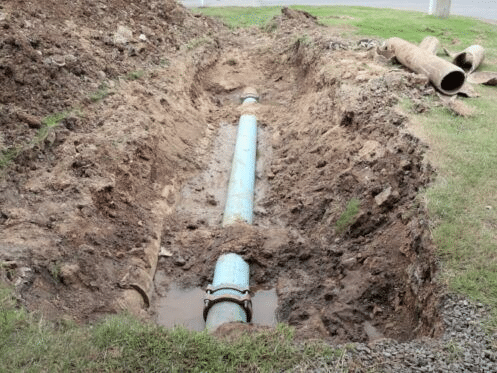
Traditional excavation digs a trench along the full length of the sewer line and replaces it section by section. It’s more invasive and takes longer, sometimes several days, but it’s occasionally necessary depending on depth, access, or existing utilities in the way.
Either method requires permits, since sewer line replacement is considered major plumbing work tied to public sanitation codes. A licensed contractor will handle that process as part of the job.
Making the Call: What a Professional Inspection Tells You
Guessing at this decision usually ends one of two ways: you overpay for a full replacement you didn’t need, or you keep throwing money at repairs on a line that was never going to hold. A camera inspection removes the guesswork. It shows the technician the pipe’s material, its condition along the full run, and exactly where any cracks, roots, or offsets are located, so the recommendation is based on what’s actually happening underground rather than assumptions.
If cost is the deciding factor between the two options, it’s worth knowing that financing options are available, so a full replacement doesn’t have to be paid all at once. And if your home relies on a septic system rather than municipal sewer, it’s worth having that checked alongside the line, since septic system issues can sometimes produce the same backup symptoms as a sewer line problem.
When to Call for Help Right Away
If you’re dealing with an active sewage backup, standing water in your yard near the line’s path, or no working drains in the house, this isn’t a wait-and-see situation. Our team handles emergency septic repair and sewer line issues throughout Lancaster County and the surrounding areas, and getting ahead of the problem early usually keeps your options open between repair and replacement, rather than forcing your hand.
If you’re weighing repair against replacement, contact Tri-County Water Services for an inspection. We’ll walk you through exactly what we find and what it means for your budget, no guesswork involved. We serve homeowners throughout our service areas across Pennsylvania and Maryland.
Frequently Asked Questions
Q: How do I know if my sewer line needs repair or full replacement?
A: A camera inspection is the only reliable way to tell. Isolated cracks or a single section of root intrusion usually point to a repair, while multiple damaged sections, a collapsed pipe, or an aging clay or cast iron line usually point to replacement. Our sewer services team can inspect your line and give you a clear recommendation.
Q: What’s the difference between trenchless and traditional sewer line repair?
A: Trenchless repair inserts a resin liner or bursts the old pipe while pulling in a new one, both without digging a full trench, which means less disruption to your yard and a faster turnaround. Traditional repair involves excavating the damaged section directly, which can still make sense for short, easily accessed sections of pipe.
Q: How long does a sewer line typically last before it needs replacement?
A: Sewer lines generally last 50 to 100 years, though the exact lifespan depends heavily on pipe material and soil conditions. Clay, cast iron, and Orangeburg pipes tend to fail earlier than modern PVC, especially in areas with expansive clay soil like parts of Lancaster County.
Q: Is trenchless sewer line replacement more expensive than traditional replacement?
A: The per-foot cost can look similar or slightly higher for trenchless methods, but it’s often cheaper overall once you factor in restoring landscaping, driveways, or walkways after traditional excavation. Trenchless work also typically finishes faster, which can offset the difference further.
Q: Can tree roots be fixed with a repair, or do they always mean replacement?
A: It depends on how widespread the damage is. A single section with root intrusion can often be cleared and lined with a trenchless repair, but roots that have infiltrated multiple points along an aging pipe usually mean replacement is the more lasting fix.
Q: Do I need a permit for sewer line replacement in Lancaster County?
A: Yes, sewer line replacement is considered major plumbing work and typically requires a permit due to public sanitation and safety codes. A licensed contractor handles the permitting process as part of the job, so you don’t have to navigate it yourself.
Q: What should I do if my sewer line backs up and I’m not sure if it’s an emergency?
A: Stop using water in your home and call for an inspection right away if you have sewage backing up, standing water near the line, or no working drains at all. Our team provides emergency septic repair and sewer service throughout the region, and you can reach us here for urgent help.

