
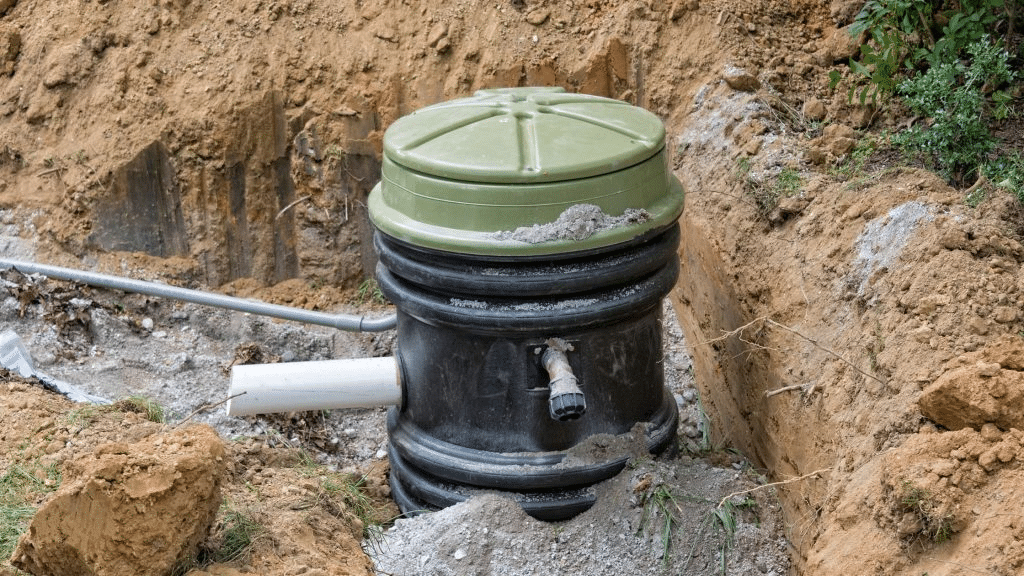
If you’ve been told your home needs a grinder pump, you might be wondering what that actually means and whether it’s the same as the sewage pump your neighbor has. Short answer: they’re not the same, and choosing the wrong one can cause serious, costly problems.
A grinder pump for septic or sewer use is a specific type of waste management device designed to grind waste into a fine slurry and push it uphill under pressure. A sewage ejector pump moves raw waste at higher volumes over shorter distances. Putting the wrong pump in the wrong situation leads to system failures, damaged drain fields, and expensive repairs.
Here’s what every homeowner in Chester, Lancaster, Berks, and Delaware Counties, PA needs to know before making this decision.
Contents
- What Is a Grinder Pump and How Does It Work?
- What Is a Sewage Ejector Pump?
- Grinder Pump vs. Sewage Ejector Pump: Side-by-Side Comparison
- Why You Should Not Use a Grinder Pump with a Septic Tank
- When Does a PA Home Actually Need a Grinder Pump?
- What Not to Flush with a Grinder Pump
- Grinder Pump Installation, Repair, and Service in PA
- Frequently Asked Questions
- / Author
- Brent D. Hershey
- Orenco Rep, Educator
What Is a Grinder Pump and How Does It Work?
A grinder pump (sometimes called a macerator pump) collects all wastewater from your home: toilets, sinks, washing machines, showers, and everything else. When the wastewater in the holding tank reaches a set level, the pump kicks on automatically.
Inside the pump, sharp cutting blades grind the solid waste into a fine slurry. That slurry is then pushed through small-diameter pipes under high pressure to the municipal sewer main or a pressure sewer system. Once the waste is cleared, the pump shuts off and waits for the next cycle.
Grinder pumps are commonly needed when:
- Your home sits below the level of the sewer main (below-grade properties)
- You live in a community served by a low-pressure sewer system
- Your home is located far from the sewer main and gravity flow isn’t practical
- You’ve added a basement bathroom or laundry room that needs to pump waste vertically
In rural Pennsylvania, this comes up more often than you’d think. Many older homes in Chester and Lancaster County were built in terrain that simply doesn’t allow gravity-fed sewer connections.
What Is a Sewage Ejector Pump?
A sewage ejector pump (also called a sewage lift pump) serves a similar purpose but works differently. Instead of grinding waste, it uses a spinning impeller to move raw sewage as-is. These pumps can handle much higher volumes of waste but are designed for shorter distances and lower pressure.
Sewage ejector pumps are typically used when:
- You need to pump waste from a basement bathroom to a gravity sewer main on the same property
- Waste only needs to travel a few hundred feet or less
- The destination is a gravity-fed sewer line, not a pressurized system
The key difference is volume versus distance. Sewage ejector pumps can move up to 200 gallons per minute but only across shorter runs. Grinder pumps handle 35 to 70 gallons per minute but can push waste thousands of feet through small-diameter pipes.
Grinder Pump vs. Sewage Ejector Pump: Side-by-Side Comparison
| Feature | Grinder Pump | Sewage Ejector Pump |
| Grinding mechanism | Yes, cutting blades macerate waste | No, impeller moves waste as-is |
| Flow volume | 35-70 gallons per minute | Up to 200 gallons per minute |
| Distance capacity | Thousands of feet possible | Typically under 750 feet |
| Pressure | High-pressure discharge | Low to medium pressure |
| Pipe diameter needed | Small (1-1.5 inch) | Larger (1.5-3 inch) |
| Best used for | Below-grade homes, pressure sewer systems | Basement bathrooms, short lifts |
| Compatible with septic? | Not recommended | Yes, appropriate for septic use |
| Typical HP | 1-2 HP | 0.5-1 HP |
Why You Should Not Use a Grinder Pump with a Septic Tank
This is one of the most important things to understand before choosing a pump. A grinder pump pulverizes waste so thoroughly that the resulting slurry cannot separate properly inside a septic tank.
Septic systems rely on natural separation: solids settle to the bottom, liquids move to the middle layer, and that liquid effluent flows out to the drain field. When finely ground slurry enters the tank, it doesn’t settle correctly. Instead, the solids stay suspended and flow out with the effluent, which can clog and destroy the drain field over time.
If your home uses a septic system, a sewage ejector pump or effluent pump is the right choice. Grinder pumps are designed for connection to pressurized municipal sewer mains, not septic tanks.
For more on keeping your system healthy, Learn more about Tri-County’s septic system services
When Does a PA Home Actually Need a Grinder Pump?
Many homeowners in Berks, Chester, Lancaster, and Delaware Counties find themselves asking this question after a plumber’s assessment. Here are the most common real-world scenarios where a grinder pump is the right call:
1. Your home is on a low-pressure sewer system
Some communities and subdivisions, particularly rural ones in Pennsylvania, are built on pressure sewer systems rather than gravity systems. If your municipality uses this infrastructure, a grinder pump is required, not optional.
2. Your home sits below the sewer main
If the grade of your property means wastewater would have to travel uphill to reach the sewer, gravity isn’t going to do the job. A grinder pump provides the pressure needed to push waste up and along to the main.
3. You’re adding a below-grade bathroom or laundry room
Finishing a basement and adding a bathroom? If that bathroom sits lower than the existing sewer line, you’ll need a way to pump waste up. A grinder pump handles this well.
4. You’re far from the sewer main
Long runs to a sewer connection are common in rural Pennsylvania. A grinder pump can push waste through small-diameter pipes over distances a sewage ejector pump simply can’t handle.
What Not to Flush with a Grinder Pump
Grinder pumps are tougher than standard pumps, but they’re not indestructible. Certain items will damage the cutting mechanism or clog the holding tank:
- Feminine hygiene products and baby wipes, even ones labeled ‘flushable’
- Diapers and paper towels
- Cooking grease or motor oil
- Kitty litter or sand
- Paint, solvents, or strong chemicals
The rule is simple: only water, human waste, and regular toilet paper should enter a grinder pump system. Anything else risks a breakdown, and grinder pump failures can back up sewage into your home quickly.
Grinder Pump Installation, Repair, and Service in PA
If you’re not sure which pump your home needs, the answer almost always comes down to where your waste needs to go, how far it has to travel, and whether you’re on a municipal sewer or a septic system.
Tri-County Water Services installs, repairs, and maintains grinder pump systems across Chester, Lancaster, Berks, and Delaware Counties. Whether you’re dealing with a failing pump, an alarm going off, or planning a new installation, getting the right assessment from a local expert saves time and money.
Our team handles grinder pump installation and repair services, We also offer a full range of sewer services to keep your system running smoothly.
If you have any doubt about which pump is right for your property, give us a call. A quick conversation can save you from installing the wrong system and dealing with the headaches that follow.
Frequently Asked Questions
Q: Can I use a grinder pump with my septic tank?
A: Generally, no. Grinder pumps break waste down into a slurry that doesn’t separate properly inside a septic tank. This can overwhelm the drain field and cause system failure. If you’re on a septic system, a sewage ejector or effluent pump is typically the better choice. Call a professional to assess your specific setup.
Q: How long do grinder pumps last?
A: Most residential grinder pumps last 8 to 15 years with proper care. Lifespan depends heavily on what goes through the system. Flushing only approved materials and scheduling regular inspections extends pump life significantly. Ignoring warning signs like frequent alarms or slow drainage shortens it.
Q: What does it mean when my grinder pump alarm goes off?
A: The alarm signals that the waste level in the holding tank is too high, usually because the pump isn’t cycling correctly. It could be a power issue, a failed float switch, or a motor problem. Limit water use immediately and call a plumber. Don’t ignore it: if the tank overflows, you’ll have a sewage backup on your hands.
Q: Is a grinder pump the same as a sump pump?
A: No. A sump pump handles groundwater and clear water that collects in a basement or crawl space. A grinder pump handles sewage and wastewater from toilets, sinks, and appliances. They serve completely different purposes and should never be swapped.
Q: Do grinder pumps need maintenance?
A: Yes, periodic professional inspection is recommended, typically every one to two years. A technician will check the float switch, motor, cutting mechanism, and alarm panel. Between service calls, you should watch for alarms, unusual sounds, or slow drainage as early warning signs.
Q: What’s the cost to install a grinder pump in Pennsylvania?
A: Grinder pump installation in PA typically ranges from $2,000 to $6,000 depending on the model, tank size, electrical requirements, and site conditions. Some municipalities own and maintain the grinder pump station, so check with your local authority before assuming full out-of-pocket cost.
Q: Can a grinder pump handle a power outage?
A: No. Grinder pumps require electricity to operate. During a power outage, you should limit water use to conserve holding tank capacity. The tank has some storage, but it will fill if you use water normally for hours. Some homeowners install battery backup systems or generators to manage this risk.
Q: Who is responsible for repairing a grinder pump, the homeowner or the municipality?
A: It depends on who owns the unit. In some communities, the municipality or utility owns and maintains the grinder pump station. In others, it’s the homeowner’s responsibility. Check your local water authority or HOA agreement to find out. For privately owned systems, Tri-County Water Services provides repair and replacement services throughout Pennsylvania and Maryland.

