

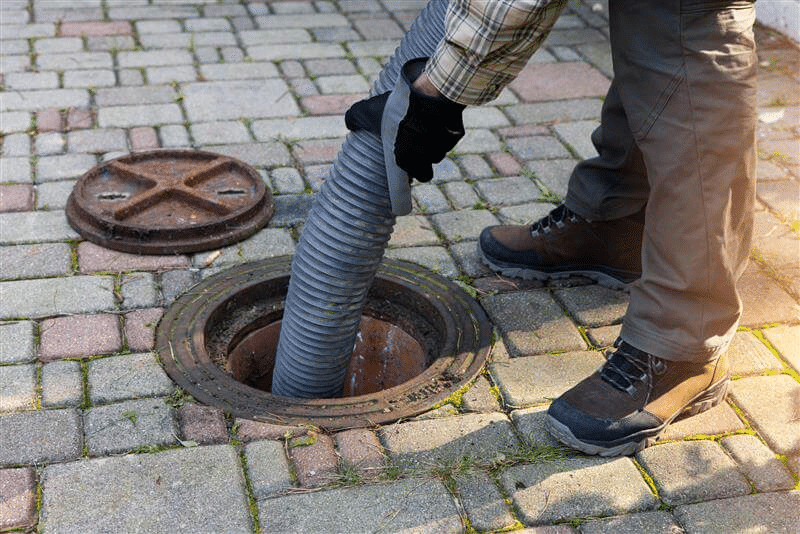
Sewer line repairs used to mean one thing: a crew shows up, digs a trench across your yard, pulls out the old pipe, and puts in a new one. It was expensive, disruptive, and often left homeowners dealing with torn-up landscaping for weeks.
Today, many sewer line repairs can be done without digging up your entire yard. Trenchless technology has changed the options available to homeowners, and for the right situation, it’s faster, less invasive, and often more affordable than traditional excavation.
But trenchless isn’t always the right answer. Your pipe material, the extent of the damage, the age of your home, and the layout of your property all factor into which method actually makes sense. Here’s a clear breakdown of both approaches so you can have an informed conversation with your plumber.
Contents
- How Traditional Sewer Line Repair Works
- How Trenchless Sewer Line Repair Works
- Trenchless vs. Traditional: Side-by-Side Comparison
- Which PA Homes Are Good Candidates for Trenchless Repair?
- What Does Sewer Line Repair Actually Cost in PA?
- Sewer Line Repair vs. Replacement: How to Know Which One You Need
- Working with a PA Plumber on Sewer Line Repairs
- Your septic and sewer systems deserve expert care. Trust Tri-County Water Services for fast, reliable, and transparent services that ensure your system stays trouble-free across PA and MD.
- Frequently Asked Questions
- / Author
- Brent D. Hershey
- Orenco Rep, Educator
How Traditional Sewer Line Repair Works
Traditional excavation, also called open-cut repair, is exactly what it sounds like. A crew digs a trench along the path of the damaged sewer line, exposes the pipe, replaces or repairs the damaged section, and then backfills the trench.
This method has been the standard for decades, and it works well. It’s the only option when a pipe has fully collapsed, when trenchless equipment can’t get adequate access, or when the pipe needs complete replacement from house to street.
What traditional repair involves:
- Locating the damaged section using a sewer camera inspection
- Excavating a trench along the pipe route, sometimes through landscaping, driveways, or concrete
- Removing and replacing the damaged pipe section or the full line
- Backfilling and compacting the trench
- Restoring the surface: lawn, concrete, or pavement as needed
In Pennsylvania, excavation permits are typically required for work that involves breaking through concrete or digging beyond a certain depth. Tri-County Water Services handles the permit process as part of the job.
How Trenchless Sewer Line Repair Works
Trenchless repair covers two main techniques: pipe lining and pipe bursting. Both fix sewer line problems with minimal digging, but they work differently and are suited to different situations.
Pipe Lining (Cured-in-Place Pipe, or CIPP)
Pipe lining involves inserting a flexible liner coated with resin into the existing damaged pipe. The liner is inflated and pressed against the pipe walls, then cured (hardened) in place using heat or UV light. The result is a smooth, durable new pipe inside the old one.
Pipe lining works well when:
- The existing pipe still has its basic shape, even if cracked or corroded
- There are multiple small cracks or areas of root intrusion
- You want to preserve landscaping, a driveway, or other surface features above the line
- The pipe has a diameter compatible with the liner equipment
Pipe Bursting
Pipe bursting pulls a new pipe through the old one while simultaneously fracturing and displacing the old pipe outward. This method replaces the pipe entirely rather than rehabbing it from the inside.
Pipe bursting is a good fit when:
- The existing pipe needs full replacement, not just patching
- The pipe material is brittle enough to fracture (clay and some cast iron pipes)
- You want a new pipe with no remnant of the old one
- The pipe route is relatively straight with minimal bends
Trenchless vs. Traditional: Side-by-Side Comparison
| Factor | Trenchless | Traditional Excavation |
| Digging required | Minimal (access pits only) | Full trench along pipe route |
| Yard disruption | Low | High, landscaping and surfaces affected |
| Cost per linear foot | $60 to $250 | $50 to $250+ depending on depth |
| Speed | Often 1-2 days | 2-5 days or more depending on scope |
| Best for | Cracked, corroded, or root-invaded pipe with basic shape intact | Collapsed pipe, full replacement, severe damage |
| PA permit needed? | Typically not for minor repairs | Usually yes for excavation work |
| Pipe materials supported | Most pipe types | All pipe types |
| Lifespan of repair | 50+ years for CIPP lining | 50+ years for new pipe |
Which PA Homes Are Good Candidates for Trenchless Repair?
Trenchless repair is a great option for many homes in Chester, Lancaster, Berks, and Delaware Counties, particularly older properties where digging would mean tearing up mature landscaping, ornamental stonework, or long concrete driveways. But it’s not universally applicable.
Trenchless repair works well when:
- The pipe is cracked or corroded but still holds its general shape
- Root intrusion has caused multiple cracks but hasn’t fully collapsed the line
- The surface above the pipe is difficult or expensive to replace, like a decorative patio, mature garden beds, or an asphalt driveway
- The damaged section is relatively accessible from existing cleanouts
Trenchless repair is typically not the right call when:
- The pipe has fully collapsed or has major sections out of alignment
- The pipe has significant bellying (low spots that hold water and waste)
- There are too many bends in the pipe route for the equipment to navigate
- The pipe diameter is outside the range supported by available liner equipment
The only reliable way to know which method applies to your property is a sewer camera inspection. This gives your plumber a clear view of what’s actually happening inside the pipe before any repair decision is made.
Tri-County Water Services provides camera inspections and a full range of sewer services across Pennsylvania and Maryland.
What Does Sewer Line Repair Actually Cost in PA?
Costs vary significantly based on pipe length, damage type, method used, and site conditions. Here are realistic ranges for homeowners in the Tri-County service area:
- Camera inspection: $200 to $800
- Pipe lining (CIPP): $80 to $250 per linear foot
- Pipe bursting: $60 to $200 per linear foot
- Traditional excavation repair: $50 to $250+ per linear foot depending on depth and surface
- Full sewer line replacement: $4,000 to $12,000 or more for a typical residential line
One important thing to keep in mind: trenchless methods eliminate the cost of surface restoration. If a traditional excavation breaks through a concrete driveway, you’re paying for the pipe repair plus the driveway. Trenchless avoids that second cost entirely, which can make it the more economical choice even when the repair itself costs a bit more per foot.
Sewer Line Repair vs. Replacement: How to Know Which One You Need
Not every damaged sewer line needs full replacement. Repairs, whether trenchless or traditional, are usually the right choice for localized damage on an otherwise functional line. Full replacement becomes the conversation when:
- The pipe is at or past the end of its expected lifespan (50-plus years for clay or cast iron)
- Multiple sections are damaged along the full length of the line
- The pipe has collapsed or is severely offset at joints
- Repeated repairs haven’t solved recurring backups or root intrusion
In older Pennsylvania homes, especially those built before the 1970s with original clay or Orangeburg (bituminized fiber) pipe, a full replacement is often the more practical long-term investment. Patching an old system can become a cycle of recurring repairs.
Learn more about our pipe repair and replacement services and what goes into that decision.
Working with a PA Plumber on Sewer Line Repairs
The right repair method for your sewer line depends on what’s actually happening inside the pipe. The starting point is always a camera inspection.
From there, a reputable plumber will show you what they found, explain your options clearly, and give you a straight answer about which method fits your situation. You should be wary of any contractor who recommends a full replacement before ever putting a camera in the pipe.
Contact us to schedule a sewer camera inspection or discuss repair options for your property.
Frequently Asked Questions
Q: Is trenchless sewer repair as durable as traditional excavation?
A: Yes, when used on the right pipe. Cured-in-place pipe (CIPP) lining has a rated lifespan of 50 years or more, and new pipe installed through pipe bursting is equivalent in durability to a traditionally excavated replacement. The key is that trenchless methods require the existing pipe to meet certain conditions. A camera inspection confirms whether your line qualifies.
Q: How long does trenchless sewer repair take compared to traditional?
A: Most trenchless repairs are completed in one to two days, including the inspection and curing time for pipe lining. Traditional excavation projects typically take two to five days depending on the length of the line and site conditions. Both approaches can be faster or slower based on specific job complexity.
Q: Can trenchless methods fix tree root damage?
A: Trenchless pipe lining can address root intrusion as long as the roots haven’t collapsed the pipe entirely. The hydro jetting step that typically precedes lining removes the roots, and the new liner prevents future intrusion. If roots have caused a full collapse or major structural failure, pipe bursting or traditional excavation may be needed instead.
Q: Do I need a permit for sewer line repairs in Pennsylvania?
A: It depends on the scope of work and your local municipality. Minor trenchless repairs often don’t require permits. Any work involving excavation, especially through concrete or across a right-of-way, typically does. Your contractor should handle permit coordination as part of the project, so make sure to ask about it upfront.
Q: What pipe materials can be lined with trenchless CIPP?
A: CIPP lining works with clay, cast iron, PVC, concrete, and Orangeburg pipe. The pipe needs to retain enough of its shape for the liner to adhere properly. Severely collapsed sections can’t be lined and may need to be excavated and replaced before the rest of the line can be lined.
Q: How do I know if my sewer line needs repair or replacement?
A: A sewer camera inspection is the only reliable way to answer that question. Repeated backups, slow drains across multiple fixtures, sewage smells, or soggy patches in your yard are warning signs. The camera tells your plumber whether the line is structurally sound or failing, and how much of the line is affected.
Q: Will sewer line repairs affect my water service?
A: In most cases, your water supply isn’t interrupted during a sewer line repair. Your plumber may need your cooperation to avoid running large amounts of water during the repair window, particularly during pipe lining when the liner needs to cure. The plumber will walk you through any restrictions before work begins.
Q: Does Tri-County Water Services offer trenchless sewer repair in Chester and Lancaster County?
A: Yes. Tri-County Water Services provides trenchless and traditional sewer line repair and replacement throughout Chester, Lancaster, Berks, and Delaware Counties in Pennsylvania, as well as Maryland. Call 610-857-1740 or contact us online to schedule an inspection and get a repair assessment.

