
If you’ve recently received a letter from your water authority asking about the material of your service line, you’re not alone. Thousands of homeowners across Pennsylvania, and the rest of the country, are getting the same notice. And for many of them, the response sets off a whole chain of questions: Do I have a lead pipe? Who pays for this? How long does the whole thing take?
We hear these questions all the time at Tri-County Water Services. So we put together this guide to walk you through what lead service line replacement actually involves, what it typically costs, what programs might be available to help, and what the process looks like from start to finish.
Contents
- What Is a Lead Service Line and Why Does It Matter?
- How Do You Know if You Have a Lead Service Line?
- Understanding Lead Service Line Replacement Cost
- Lead Service Line Replacement Programs: Is There Financial Help Available?
- The Lead Service Line Replacement Process: Step by Step
- Why Work With a Local Lead Line Replacement Contractor?
- Ready to Get Started? Tri-County Water Services Is Here to Help
- Leaking pipes or basement flooding? No need to stress! Our skilled team will quickly solve your plumbing issues, restoring your home's peace of mind.
- Frequently Asked Questions About Lead Service Line Replacement
- / Author
- Brent D. Hershey
- Orenco Rep, Educator
What Is a Lead Service Line and Why Does It Matter?
A service line is the pipe that carries water from the public water main in the street into your home. In older homes, particularly those built before 1986, these pipes were often made of lead. When water sits in or passes through a lead pipe, small amounts of lead can dissolve into it. Over time, that adds up.
Lead is a neurotoxin. Even low levels of exposure can affect brain development in children and contribute to cardiovascular and kidney problems in adults. There is no amount of lead that is considered safe for children to consume. This is why the EPA has been tightening its Lead and Copper Rule over the past several years, pushing water systems across the country to inventory their service lines and begin replacing the ones made of lead.
The tricky part is that the service line is often divided into two segments. The public side runs from the water main to the property line and is owned and managed by the water utility. The private side runs from the property line into your home and is your responsibility as a homeowner. Many lead service line replacement programs only cover the public segment, which is why homeowners are increasingly being contacted and asked to take care of their side.
How Do You Know if You Have a Lead Service Line?
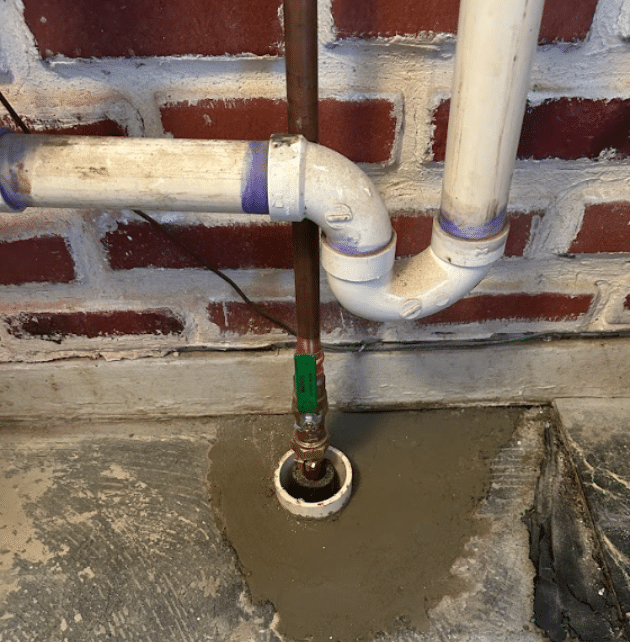
The easiest place to check is where the pipe enters your home, usually in the basement or crawl space near the water meter. Lead pipe has a dull gray color and is soft enough that you can scratch the surface with a coin or key and see a shiny silver stripe underneath. It also tends to have a slightly swollen joint where it connects to the meter.
Galvanized steel pipes are also a concern. These were commonly used as a replacement for lead in older homes, but over the years galvanized pipes can accumulate lead from previous lead connections, and they are typically categorized as “galvanized requiring replacement” under the EPA’s updated rules.
If you received a notification letter from your water authority, it likely included instructions on how to check your pipe material and report back. If you’re not sure what you’re looking at, a licensed plumber can take a look and give you a clear answer.
Understanding Lead Service Line Replacement Cost
This is usually the first question homeowners ask, and rightfully so. Lead service line replacement cost varies quite a bit depending on several factors.
The length of the line is one of the biggest variables. A short run from the curb to a basement in a newer suburban neighborhood costs less to replace than a long run through a densely developed older property. Depth matters too, since a pipe buried several feet underground requires more excavation. Other considerations include whether the pipe runs under a driveway, patio, or landscaping that will need to be restored afterward, and what local permitting fees look like.
Nationally, lead water line replacement costs typically range from a few thousand dollars on the lower end to more than ten thousand dollars for complex jobs in urban areas. In southeastern Pennsylvania, most straightforward residential projects fall somewhere in the middle of that range.
It is worth noting that partial replacement, meaning replacing only part of the line while leaving some lead pipe in place, is no longer considered a best practice. Disturbing a lead pipe without fully removing it can temporarily increase lead levels in your water. Full lead service line replacement from the street connection to the building is the approach that actually solves the problem.
Lead Service Line Replacement Programs: Is There Financial Help Available?
The short answer is yes, in many cases. Federal infrastructure funding has pushed a significant amount of money toward lead service line replacement across the country, and Pennsylvania utilities have been putting that funding to work.
Many water authorities in Chester County, Lancaster County, and Berks County are actively running lead service line replacement programs. Some of these programs cover the full cost of replacement for eligible customers. Others provide partial assistance or low-interest financing. A few utilities have partnered with local contractors to streamline the process so homeowners don’t have to manage the whole thing on their own.
The most important step before scheduling any work is to contact your local water authority and ask what programs are available. Program availability, eligibility requirements, and funding levels change regularly, so getting current information directly from your utility is essential. Tri-County Water Services works closely with local water authorities in our service area, and we are familiar with the programs and requirements in place across Chester, Lancaster, and Berks Counties.
The Lead Service Line Replacement Process: Step by Step
Understanding what actually happens during a lead water line replacement can help reduce some of the anxiety around the project. Here is what the process generally looks like.
• Verification and mapping: Before any work begins, the contractor locates and confirms the material of the existing service line and maps the path it takes from the street to the building.
• Coordination with the water authority: The utility needs to be involved for the water shutoff, inspection, and any program-specific requirements. This coordination is part of what we handle on your behalf.
• Excavation: The existing lead or galvanized pipe is excavated safely. We take care to minimize disruption to your yard, driveway, or landscaping.
• New pipe installation: The old pipe is removed and replaced with code-compliant materials, typically copper or an approved plastic.
• Line flushing: Once the new line is connected, the system is thoroughly flushed to clear out any loose particles that may have been dislodged during the work.
• Restoration: Any disturbed surfaces are restored. This may include patching a driveway, replacing sod, or repairing a sidewalk, depending on the scope of the excavation.
The whole process for a typical residential job can often be completed in a single day, though more complex projects may take longer.
Why Work With a Local Lead Line Replacement Contractor?
When homeowners search for lead line replacement near me, what they’re really looking for is someone who knows the local codes, has relationships with the local water authorities, and understands the specific conditions in their area. Southeastern Pennsylvania has its own mix of soil conditions, housing stock, and pipe configurations that a contractor from out of the region simply won’t be as familiar with.
Tri-County Water Services has been serving Berks, Chester, and Lancaster Counties for years. We know the utilities, we understand the permitting requirements, and we have seen the full range of service line situations that come up in older Pennsylvania homes. That local knowledge makes the process faster and less stressful for the homeowner.
We’re also equipped to handle the full scope of the job, from initial verification to final surface restoration, so you don’t have to coordinate multiple contractors.
Ready to Get Started? Tri-County Water Services Is Here to Help
If you’ve received a notification about your service line, or if you just want to find out whether your home is at risk, the best thing you can do is take action sooner rather than later. Lead exposure is not something to put off.
Tri-County Water Services handles lead service line replacements throughout Chester, Lancaster, and Berks Counties. We work with local water authorities, understand the permitting process, and complete every job with care for your property and your family’s water quality.
Frequently Asked Questions About Lead Service Line Replacement
Q1. What is a lead service line?
A lead service line is the pipe that runs from the public water main to your home. In homes built before 1986, this pipe was often made of lead. Over time, small amounts of lead can leach from the pipe into your drinking water, which is why replacing these lines has become a national public health priority.
Q2. How do I know if my home has a lead service line?
Check the pipe where it enters your basement or crawl space near the water meter. Lead pipe is dull gray and will show a shiny silver color when you scratch it with a coin. It is also soft and flexible. If you received a letter from your water authority, it likely included instructions for identifying and reporting your pipe material. When in doubt, have a licensed plumber take a look.
Q3. Is a partial lead service line replacement enough?
No. Partial replacement, meaning replacing only the utility-owned portion while leaving lead pipe on the private side, is no longer considered a safe or effective solution. Disturbing a lead line without fully replacing it can actually increase lead levels in your water temporarily. Full replacement from the street to the building is the only approach that permanently eliminates the risk.
Q4. What does lead service line replacement cost for a typical home?
Costs vary based on the length and depth of the line, site access, surface restoration requirements, and local permitting fees. Nationally, projects range from a few thousand dollars for simple jobs to more than ten thousand dollars for complex ones. In southeastern Pennsylvania, most standard residential replacements fall somewhere in the middle. The best way to get an accurate number is to request a quote specific to your property.
Q5. Is there a lead service line replacement program that can help cover the cost?
Yes, in many communities there is. Federal infrastructure funding has been flowing to water utilities across the country for lead service line replacement programs, and many utilities in Chester, Lancaster, and Berks Counties have programs in place. Some offer full coverage for eligible customers, others offer partial assistance or financing. Contact your local water authority first to find out what is available before scheduling any work.
Q6. Who is responsible for the private side of the service line?
The portion of the service line from the property line into your home is the homeowner’s responsibility. The utility owns and manages the portion from the water main to the property line. This is why many homeowners receive notifications asking them to address their side of the connection even when the utility has already replaced its portion.
Q7. How long does lead water line replacement take?
A typical residential lead water line replacement can be completed in a single day. More complex jobs, such as those involving long pipe runs, difficult excavation conditions, or surface restoration, may take longer. Your contractor should be able to give you a realistic timeline based on the specifics of your property before work begins.
Q8. Will lead service line replacement disrupt my yard or driveway?
Some excavation is required, but experienced contractors work to minimize the impact. At Tri-County Water Services, we take care to limit disruption to landscaping, driveways, and hard surfaces, and we restore any disturbed areas as part of the job. The scope of restoration depends on where the pipe runs and how deep it is buried.
Q9. I searched for lead line replacement near me. Does Tri-County Water Services serve my area?
Tri-County Water Services serves homeowners and small businesses throughout Chester, Lancaster, and Berks Counties in Pennsylvania. If you’ve received a notification from your water authority or simply want to know whether your service line is safe, give us a call at 610-857-1740 or visit tricowater.com to get in touch.
Q10. What should I do after my lead service line is replaced?
After replacement, run your cold water taps for several minutes to flush the new line before using water for drinking or cooking. Your contractor will also flush the line as part of the installation process. In the weeks following replacement, it is a good idea to clean your faucet aerators, as small particles can occasionally become lodged there during the work.

