


Lead service line replacement is one of the most important public health and infrastructure priorities for communities across Pennsylvania. For homeowners, understanding how lead pipes affect drinking water and what options exist to replace them is key to both safety and long‑term financial planning.
In this guide, you will learn what lead service lines are, why replacing them is important, how the program works in Pennsylvania to replace your lead service line and what it could cost to do that work as well as where you can get help. You’ll finish ready to take informed action for your home and family.
Contents
- What Are Lead Service Lines?
- Why Lead Service Line Replacement Matters for Homeowners
- What You Need to Know About Pennsylvania’s Lead Service Line Replacement Program
- Utility Engagement & Regulatory Framework
- How the Program Works
- Cost to Replace Lead Service Line: What Homeowners Need to Know
- Step‑by‑Step: What to Expect in a Replacement
- Conclusion: Take Action Today for Safer Water Tomorrow
- Leaking pipes or basement flooding? No need to stress! Our skilled team will quickly solve your plumbing issues, restoring your home's peace of mind.
- Frequently Asked Questions
- / Author
- Brent D. Hershey
- Orenco Rep, Educator
What Are Lead Service Lines?
From the street, a service line is the pipe connecting your home’s plumbing to one or another public water main. In many cases, service lines were historically made of lead particularly in homes built before the 1950s. Lead was widely used as well because it’s a durable and malleable metal, but it can leach into drinking water over time, presenting serious health hazards particularly for children and pregnant women.
A lead service line is usually made up of two pieces:
- Utility‑owned portion (from the water main to the property line).
- Customer‐owned section from the curb to your home’s water pipes.
In Pennsylvania, both ends are slated to be replaced as changing public policy continues its assault.
Why Lead Service Line Replacement Matters for Homeowners
Exposure to lead is also clearly a known public health problem. Even small amounts of lead in drinking water can:
- You damage the child brain literally, that’s what you do.
- Cause behavioral problems.
- Long‑term health risks for adults would increase.
By removing old lead pipes, you eliminate the possibility of lead leaching into your drinking water at existing homes and new construction. While corrosion control, including adding inhibitors to finished water, can make a difference and in some places has been relied on for more than two decades lead water line replacement is the only long‑term solution.
What You Need to Know About Pennsylvania’s Lead Service Line Replacement Program
Pennsylvania has been proactive in addressing the replacement of lead service lines, mandating utilities to inventory and replace both lead and some galvanized pipes under federal/state mandates.
Utility Engagement & Regulatory Framework
In 2025, the Pennsylvania Public Utility Commission (PUC) had approved the Phase II of a comprehensive lead service line replacement plan filed by Aqua Pennsylvania, which consists of:
- Creating a service line inventory to locate lead and galvanized pipelines.
- Substituting for both utility‑owned and customer‑owned lines.
- Focusing on areas where high levels of lead exposure are more likely, such as schools and homes with high readings.
These programs are components of long‑range infrastructure work plans consistent with federal Lead and Copper Rule Improvements, which mandate that systems replace lead service lines within a prescribed time frame.
How the Program Works
Pennsylvania American Water (a utility with a large service area) and other service providers currently operate proactive lead service line replacement programs that:
- Locate service line materials by field survey and customer feedback.
- Replace lead service lines (both utility portion and customer portion), frequently with no direct cost to homeowner if performed through the utility’s program.
- Homeowners should be contractually obligated and grant access for replacement.
- Guarantee installed service lines for two years upon completion per program terms.
Cost to Replace Lead Service Line: What Homeowners Need to Know
Cost is a top concern for homeowners considering replacing lead water lines. Historically, homeowners have paid about $3,000 to $5,000 or more to replace the private portion of a lead service line depending on its length, soil conditions and access.
However, in Pennsylvania:
- When replacements are done through the utilities’ program, homeowners don’t directly get billed the utility does and they pay them back.
- Utilities might recoup costs through rate mechanisms that the PUC signs off on, allowing cost recovery to be spread out among more customers.
- Some will reimburse homeowners if they have replaced lead plumbing recently, before the utility’s project. The rules differ by utility and program.
Homeowners should continue to confirm eligibility with their water provider prior to doing any replacement work on their own in order to be reimbursed or take part in their utility’s programs.
Step‑by‑Step: What to Expect in a Replacement
Although the process varies among utilities, some common steps for replacing lead service lines are:
- Line Identification: Finds out where lead pipes are checking maps, utility records or having an inspection.
- Agreement: Homeowners execute a right-of-entry or replacement agreement.
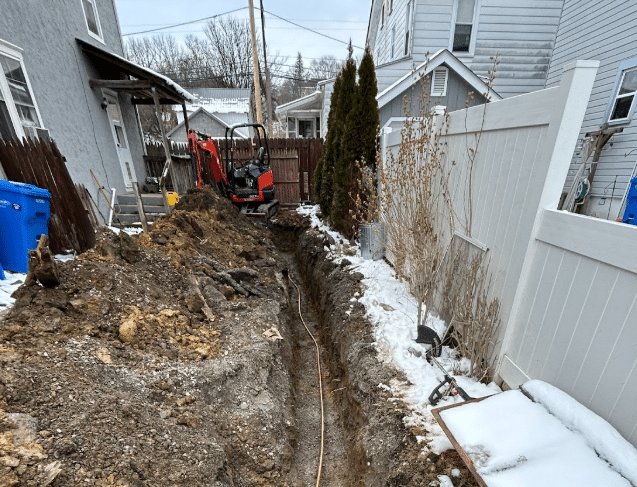
- Replacement Work: Lead service lines are excavated and replaced by crews, generally in one day.
- Restoration: Property features, such as lawns and sidewalks, are restored.
- Flushing & Testing: Upon replacement, homeowners may be advised to run their water and take such samples to the city for verification of lead levels.
Conclusion: Take Action Today for Safer Water Tomorrow
Removing lead water pipes from your home is a wise investment for the health of your family and the future of your home. The state of Pennsylvania’s initiatives to clean up tainted water supplies under public utility mandates as well as federal directives would build on decades-long attempts that have been too slow to replace this existing system without sticking homeowners with the tab.
By knowing your outlet, investigating whether you qualify for utility programs and knowing what questions to ask, you can take control of having safer drinking water.
If you live in Pennsylvania and think your home may have lead service lines, call your water provider today to learn about options for replacing the lines and determine whether you qualify.
Frequently Asked Questions
1. Lead service line replacement: What does it mean?
Lead service line replacement is the removal and replacement of lead pipes that connect homes to the public water system, an effort to combat unsafe drinking water.
2. How can I determine if my service line is lead?
Get in touch with your water utility, or look at its service line material maps and reports. Certain utilities also permit property owners to self‑report materials.
3. Who is responsible for paying for replacement of lead service lines?
Utilities pay the costs for work completed under approved replacement plans in many lead service line replacement programs throughout Pennsylvania.
4. For a little while, will my water service be disrupted?
Yes, if you will be without water for a few hours during installation.
5. What happens after the change is done?
By flushing the plumbing and possibly doing some water testing, you work to ensure that lead particles do not continue to linger.
6. Can I replace my lead water line myself and get reimbursed?
Some utilities will provide reimbursements for residents who replaced a lead service line prior to the utility’s project, although the terms vary and generally require documentation.
7. Will it result in better water quality right away?
Yes, getting rid of lead pipes eradicates a main source of leaching from lead into water and delivers safer water over the long term.
8. What if only some of my line is lead?
Federal regulations discourage partial replacements unless they are part of overall work, partly because taking out only part of the line can temporarily elevate lead levels.
9. How long does replacement take?
Most service line replacements will be completed within one day, and restoration work will occur soon afterwards.
10. Are there health hazards of lead pipes?
Yes. Exposure to lead in drinking water is a health concern, especially for children; replacing these reduces potential exposure.

