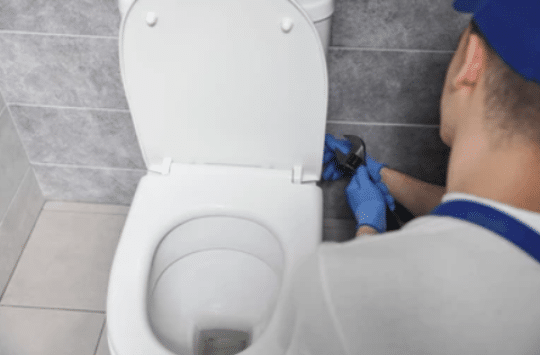
A toilet leak can waste thousands of gallons of water each year and possibly cause recurrent structural damage. Nonetheless, many homeowners in Pennsylvania unknowingly overlook the early signs of this type of leak. By recognizing specific signs, including wetness around the toilet base, an unusual spike in the water bill, or sewer smells, and reacting quickly by shutting off the water and calling a licensed plumber in Chester County, the property owner can get ahead of mold growth, subfloor problems, and unnecessary water waste.
Signs of a Leaking Toilet
There are several subtle signs to help indicate a toilet leak occurs, even before visible water damage presents itself. A consistent musty smell near the floor of the bathroom may indicate moisture without visible signs, meaning mold can grow below towels or subflooring. An unexplained increase in the monthly water bill, without an accompanying change in usage in the home, may often indicate a leak is present and undetected in the toilet system, especially if water is continuously cycling from the tank to the bowl. Listen for constant dripping or “phantom flushes,” when the toilet refills without being flushed as possible signs of internal part failures, like a failing flapper valve or a faulty fill valve.
There may be physical signs of a leak, such as discoloration or warping of the flooring around the toilet base. This can occur after moisture travels through grout lines, or from wooden materials. If the toilet is able to move when gently rocked, it is possible the mounting bolts are loose, or the wax ring is compromised, which would mean water could escape while flushing. These signs should be inspected quickly, since leaks could cause structural support damage or facilitate the growth of dangerous microbes behind walls or flooring.
Frequent Toilet Leak Issues
Most toilet leaks are associated with failed seals or pesky parts that have worn out over time. The wax ring at the base of the toilet provides a watertight seal between the toilet and the waste drain; and overtime, wax can fail or be damaged through time, exposure to temperature changes, or damage from improper installation, allowing waste to spill on to your bathroom floor. Mounting bolts that are loose or corroded can compromise the sealing effectiveness of the wax ring and increase waste water to spill at the base of the toilet. While less common, cracks in the porcelain toilet bowl or tank can occur from physical impact or cycles of freeze thawing and provide additional leakage points.
Many of the internal mechanisms inside the toilet, including the flapper valve that controls the water flow from the tank into the the bowl, can fail after a long period of time. A flapper that isn’t upright or that has substantial mineral deposits, probably isn’t sealing properly and will cause the tank to refill repeatedly and increase your water bill. The fill valve, that shuts off water when the tank is full, can also fail and cause water overflow through the standpipe, even if the toilet is not being used. Condensation on the outside of the tank when the outside of the tank is cold can happen in a humid environment can often be mistaken for a leak; this will often be remedied with the application of insulation on the outside of the toilet or an anti-sweat kit, rather than fixing the plumbing.
Immediate Response and Prevention Efforts
Immediately after discovering a leak, the homeowner should shut the water supply valve behind the toilet, which halts any new water damage since the leak is no longer ongoing. Next, immediately remove any standing water, and place absorbent towels around the base of the toilet to limit damages and reduce slip dangers. The homeowner can run a dye test, by adding food coloring to the tank and checking to see if the food coloring shows up in the bowl without the toilet having been flushed, to verify any leaks that are internal leaks associated with defective flappers or flush valves. If the base is wet, the homeowner should not over-tighten the bolts, as this may crack the porcelain. Again, the homeowner should visually inspect for any damage, and consult a reputable plumber if there are any concerns.
Preventive maintenance can improve the longevity of the toilet and help to reduce the chances of failure. Checking the stability of the toilet, listening for any unusual sounds, and taking water meter readings after turning off all fixtures can help locate leaks inside a home at an early stage. Yearly inspections of toilets and associated components by licensed plumbing professionals can confirm the overall condition of seals and the functionality of parts, both of which are necessary for homes with older plumbing systems (eg. homes with galvanized pipe or old fixtures). If a resident of Chester Springs or surrounding communities is in need of emergency plumbing help, Tricowater Teams up with your local specialists to provide a plumber for immediate callouts all day everyday to stop repairs and water loss incurring costs.
When Should You Call a Professional Plumber
Although it might be appropriate for a hobbyist to tackle small repairs (like the replacement of a malfunctioning flapper valve), bigger issues will likely merit professional assistance. Persistent leaks at the connection, recurrent clogging, or damage to the flange or subfloor will require special tools and expertise to resolve. In addition, a professional plumber can identify other underlying problems – such as a drain pipe that is not properly aligned, corroded flanges, or damage to the subfloor – that a non-expert may not notice. In Chester County, licensed emergency technicians will perform code-compliant repairs that prevent additional property damage, and restore your system quickly. A licensed plumber should always be called at the first sign of a plumbing problem to protect your property, as well as timeline of conservation efforts.

